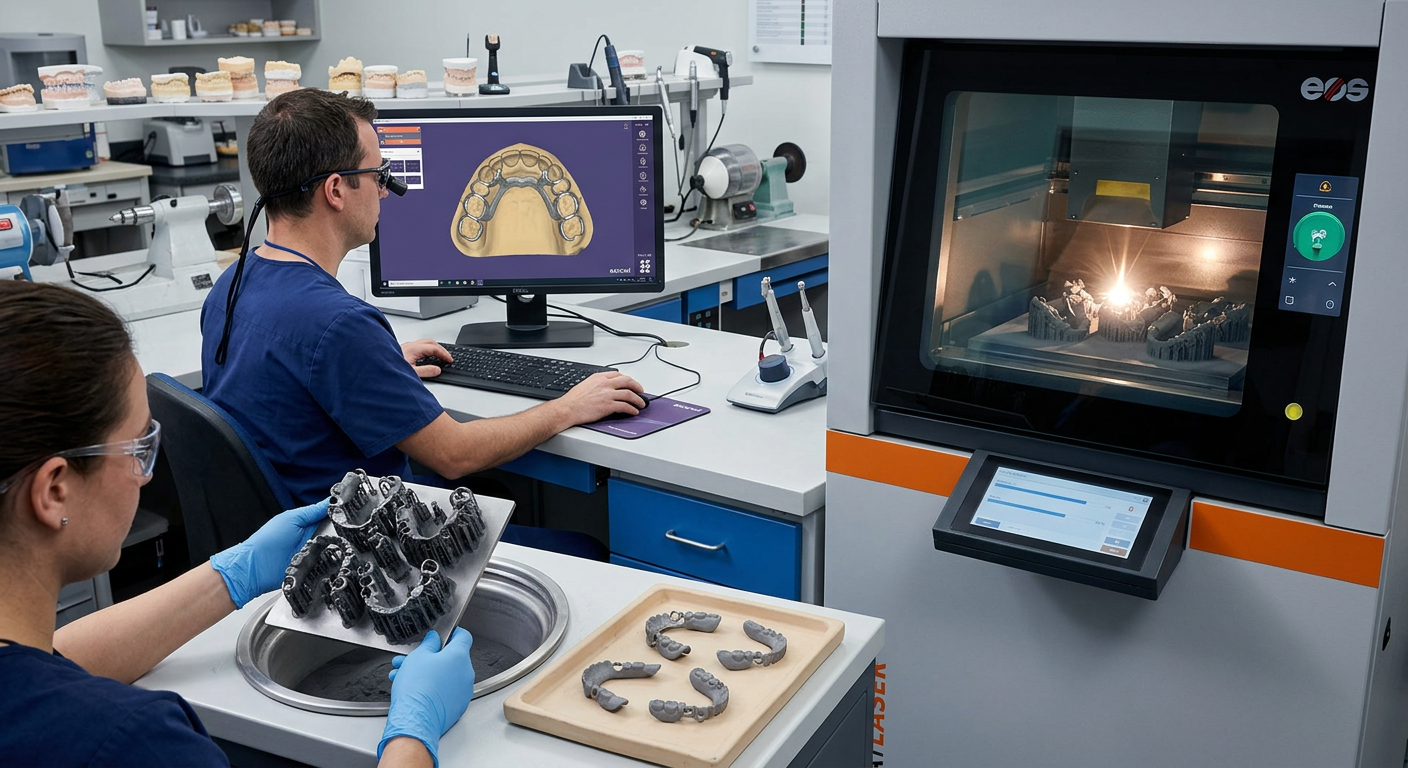
The removable partial denture (RPD) market is undergoing a major transformation thanks to advances in 3D printing technology. One of the most significant developments in recent years is the introduction of new flexible printing materials specifically designed for RPD fabrication. Traditionally, flexible partial dentures required labor-intensive manufacturing processes that depended heavily on technician expertise. Today, innovative printable resins are allowing dental laboratories to produce highly accurate, durable, and aesthetically pleasing flexible RPDs with greater efficiency.
Recent material innovations have focused on improving flexibility, translucency, dimensional stability, and patient comfort while reducing production costs. These new-generation materials are helping laboratories shorten turnaround times and improve consistency from case to case. As digital workflows become more widespread, dentists can now capture intraoral scans, send digital files directly to the laboratory, and receive finished prostheses faster than ever before. This digital approach also minimizes remakes and adjustments by improving accuracy throughout the production process. Patients benefit from lighter, more comfortable restorations that provide a natural appearance and improved retention.
For dental professionals, the ability to manufacture flexible RPDs through additive manufacturing represents an opportunity to increase productivity while maintaining high-quality clinical outcomes. Industry experts believe that the growing availability of advanced flexible resins will accelerate the adoption of fully digital removable prosthetic workflows worldwide. As technology continues to evolve, 3D-printed flexible RPDs are expected to become a standard solution for many partial edentulism cases, helping clinicians deliver faster, more predictable, and more cost-effective treatments. These innovations demonstrate how digital dentistry is reshaping removable prosthetics and creating new opportunities for both dental laboratories and clinicians.